Neotonics Reviews: What This Skin & Gut Probiotic Gummy Contains and What the Evidence Supports
By the Naturyme Editorial Team · Updated October 2026
Disclosure: this article contains affiliate links. If you buy through them, we may earn a commission at no extra cost to you. It does not change what we write.
Neotonics at a Glance
| Form | Chewable gummy — 1 a day, about 30 minutes before a morning or afternoon meal; 30 gummies per bottle |
| Core ingredients | Bacillus coagulans (500 million CFU) + 430 mg blend: chicory root inulin, babchi, fennel seed, fenugreek, ginger root, lemon balm, lion's mane, slippery elm bark, dandelion leaf |
| Made in | USA with globally sourced ingredients; the site shows GMP and FDA-registered facility badges |
| Guarantee | 60 days, counted from the delivery date |
| Shipping (US) | Free on the 6-bottle package; the shipping policy lists free US delivery in 5–7 working days (confirm at checkout for 1 and 3 bottles) |
| Main caution | Babchi can increase sun sensitivity and has been linked to rare liver problems; check with a doctor if pregnant, immunocompromised or on medication |
For many adults the first signs of aging show up in two places at roughly the same time. The skin loses some of its brightness and bounce, and digestion becomes less predictable, with more bloating after meals or irregular bathroom habits. Supplement makers have noticed the overlap, and a whole category of products now promises to improve the skin from the inside by working on the gut. Neotonics is one of the best known.
Neotonics is a once-a-day probiotic gummy that combines a single bacterial strain with nine plant and fiber ingredients. In this review we read the actual Supplement Facts label, separate the brand's marketing story from what scientists currently know about the gut-skin connection, look at the research behind each ingredient, and lay out the price, shipping and refund terms exactly as the official website states them. Our goal is simple: to help you decide whether it is worth trying, and what to realistically expect if you do.
→ See the Neotonics label and current offer on the official website
What Is Neotonics?
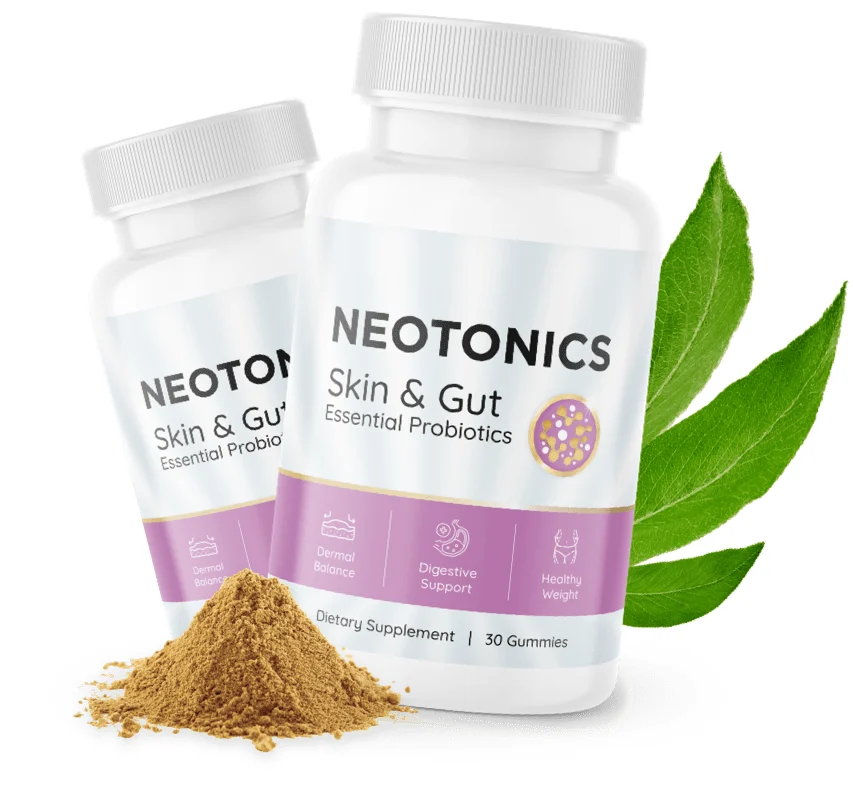
Neotonics is a dietary supplement sold as a chewable gummy. Each bottle holds 30 gummies, which is one month at the recommended dose of one a day. The front of the bottle reads "Skin & Gut Essential Probiotics" and lists three areas of support: dermal balance, digestive support and healthy weight. It is aimed at adults who want healthier-looking skin as they get older and who also have occasional digestive discomfort.
The label published on the official website shows that every gummy provides Bacillus coagulans at 500 million CFU (colony-forming units) and a 430 mg proprietary blend of chicory root inulin, babchi powder, fennel seed powder, fenugreek powder, ginger root extract, lemon balm leaf extract, lion's mane powder, slippery elm bark powder and dandelion leaf powder. The sales page adds that the ginger (described as Ceylon ginger) and the lion's mane are organic, and that the formula is non-GMO, gluten free, stimulant free and non-habit forming.
Because it is a gummy, the remaining ingredients are what you would expect from a chewable: glucose syrup, water, sucrose, natural flavors, apple pectin, citric acid, trisodium citrate, black carrot extract for color, vegetable oil and carnauba wax. Each gummy has 4 calories, 2 g of carbohydrate and 1 g of sugar (less than 1 g of it added). The label states "No Allergens" and that the product is made in the USA with globally sourced ingredients. It is distributed by a company in Largo, Florida.
A word on manufacturing claims. The sales page shows a badge for an "FDA-registered facility", while one answer in its FAQ describes the facility in stronger, approval-style wording. Registration simply means the facility is listed with the FDA. The agency does not approve dietary supplements or test them for effectiveness before they are sold, and the Neotonics label itself carries the standard notice that its statements have not been evaluated by the FDA.
How Neotonics Is Said to Work: Claim vs. Evidence
The marketing for Neotonics centers on skin cell turnover, the natural cycle in which the outer layer of skin sheds old cells and replaces them with new ones. The brand's argument is that this cycle slows down because the gut "ages": digestion and nutrient absorption become less efficient, the skin receives less of what it needs, and wrinkles, dullness and uneven texture follow. The fix, according to the sales page, is to bring in fresh beneficial bacteria and plant ingredients that restore the microbiome.
Parts of this story are grounded in real science. Researchers do study a gut-skin axis, and a widely cited 2018 review in Frontiers in Microbiology described how gut bacteria can influence inflammation and immune responses that also show up in the skin. Skin cell turnover really does slow with age.
What the evidence does not show is that a single probiotic gummy can measurably speed up skin renewal or reverse wrinkles. The sales page says researchers have "demonstrated" that the gut controls cell turnover and that its ingredients are "clinically proven" for glowing skin; those phrases go further than the published research. Most studies on probiotics and skin involve specific conditions such as eczema, use different strains and doses, and report modest, inconsistent results. Sun exposure, smoking, sleep, genetics and hormones remain far bigger drivers of skin aging than the microbiome. It is fair to see Neotonics as a gut-support product with plausible but unproven indirect benefits for skin, not as an anti-aging treatment.
Neotonics Ingredients and What the Research Says
The probiotic count is listed separately, but the nine other ingredients share one 430 mg blend, and the label does not say how much of each it contains. That is common in this category, yet it means none of the doses can be compared directly with clinical studies. Here is what is known about each one.
1. Bacillus coagulans (500 million CFU)
Bacillus coagulans is a spore-forming probiotic. Its spores are tough enough to survive heat and stomach acid, which is one reason it is often used in gummies and foods that would destroy more delicate bacteria. Small randomized trials have found improvements in bloating, abdominal discomfort and stool frequency in people with irritable bowel syndrome, including a 2016 pilot study of the MTCC 5856 strain and a 2009 study of the GBI-30, 6086 strain. Two limitations apply: the Neotonics label does not name the strain, and probiotic effects are strain-specific. Several trials also used doses of one to two billion CFU or more, higher than the 500 million listed here. There is no human trial of this species for skin aging.
2. Chicory Root Inulin
Inulin is a soluble fiber that acts as a prebiotic, meaning it feeds beneficial gut bacteria such as bifidobacteria. That effect is well documented, and a 2017 meta-analysis in the American Journal of Clinical Nutrition found that soluble fibers, including inulin-type fibers, produced small reductions in body weight in adults with overweight. Those studies used several grams a day, though, while the entire Neotonics blend is less than half a gram. Inulin can also cause gas and bloating, especially when someone starts taking it.
3. Babchi (Psoralea corylifolia)
Babchi is a seed used in Ayurvedic medicine for skin conditions. It is the natural source of bakuchiol, a compound promoted in skincare as a gentler alternative to retinol; a 2019 trial in the British Journal of Dermatology found topical bakuchiol cream comparable to retinol for wrinkles and pigmentation over 12 weeks. That study used a cream applied to the face, not an oral supplement. Babchi also contains psoralens, compounds that make skin more sensitive to ultraviolet light, and case reports have linked oral Psoralea products to liver injury. It is the ingredient in Neotonics that most deserves caution.
4. Fennel Seed
Fennel has a long traditional use for gas and mild cramping after meals, and it is a common ingredient in digestive teas. Human research is limited and mostly involves combination products, so its contribution here is best described as traditional rather than proven.
5. Fenugreek
Fenugreek seed is rich in soluble fiber and has been studied mainly for blood sugar control, with modest effects reported in some trials. The National Center for Complementary and Integrative Health (NCCIH) notes that it can cause digestive upset and a maple-like body odor, should not be used in pregnancy in amounts above those found in food, and may lower blood sugar. Animal research suggests it can change gut bacteria, but skin claims are not supported by human trials.
6. Ginger Root
Ginger has some of the better evidence among digestive herbs: NCCIH summarizes research showing it may help with nausea, including pregnancy-related nausea. Its role in skin health is unstudied in people. The quantity in a gummy is likely to be small compared with the 1 g or more used in nausea studies.
7. Lemon Balm
Lemon balm is a member of the mint family traditionally used for relaxation and digestion. Small trials have looked at its effects on mood and sleep. Any skin benefits mentioned online come mostly from topical use or laboratory research.
8. Lion's Mane
Lion's mane is an edible mushroom best known for research on brain health; a small Japanese trial in 2009 reported improved cognitive scores in older adults with mild cognitive impairment. The sales page describes it as having long-term anti-aging effects, but there are no human studies of lion's mane for skin.
9. Slippery Elm Bark
The inner bark of the slippery elm tree forms a soothing gel (mucilage) when mixed with water, which is why it has been used for sore throats and an irritated stomach. Modern clinical research is sparse. Because this coating effect may slow the absorption of other medicines, it is generally advised to take it a couple of hours apart from prescription drugs.
10. Dandelion Leaf
Dandelion leaf is a traditional diuretic, and a small 2009 study found a short-term increase in urine output after taking a leaf extract. NCCIH notes there is little reliable evidence for other uses and that dandelion can cause allergic reactions in people sensitive to related plants such as ragweed.
Prefer a gummy to capsules? Check the current Neotonics packages on the official site.
Visit the Official Neotonics Website →Pros and Cons of Neotonics
Pros
- Full Supplement Facts label published on the official website
- Spore-forming probiotic that is suited to a gummy format
- Easy routine: one chewable gummy a day, no water-mixing or pills
- Combines a probiotic with a prebiotic fiber (inulin)
- One-time purchase with no subscription, and a 60-day refund window
Cons
- Individual herb doses hidden inside a 430 mg proprietary blend
- Probiotic strain not named; 500 million CFU is lower than many studies used
- Skin and anti-aging claims go beyond the available evidence
- Babchi raises sun-sensitivity and liver cautions
- Refund requires returning all bottles at your own postage cost
Who Might Consider Neotonics (and Who Should Not)
Neotonics may make sense for adults who:
- want a simple daily probiotic and prefer chewing a gummy to swallowing capsules
- have occasional bloating or irregularity and are interested in a probiotic-plus-prebiotic approach
- already have a good skincare routine (sunscreen, moisturizer, adequate sleep) and want to see whether gut support adds anything
- are comfortable judging results over two to three months, under a 60-day refund window
It is not a good fit, or needs a doctor's approval first, for people who:
- are pregnant or breastfeeding (fenugreek and babchi are not recommended in pregnancy)
- have a weakened immune system, a central line, or a serious illness, since probiotics carry a small infection risk in these groups
- have liver disease or take medications processed by the liver
- use photosensitizing drugs or light therapy, or spend a lot of time in the sun
- take diabetes medication or blood thinners
- have an active skin condition such as severe acne, rosacea or psoriasis, which deserves a dermatologist's assessment
Persistent digestive symptoms, unexplained weight loss, blood in the stool or a sudden change in bowel habits should always be checked by a doctor rather than self-treated with supplements.
Safety and Side Effects
The official FAQ says there have been no reports of notable side effects. Independent safety data on the finished product does not exist, so the best guide is the safety profile of its ingredients.
- Digestive changes: probiotics and inulin commonly cause mild gas or bloating in the first one to two weeks while the gut adjusts.
- Sun sensitivity: babchi contains psoralens. Use sunscreen and be cautious if you notice unusual redness after sun exposure.
- Liver: rare case reports link oral Psoralea corylifolia to liver injury. Stop and see a doctor if you develop dark urine, yellowing of the eyes or unexplained fatigue.
- Blood sugar: fenugreek may lower glucose, which matters for people on diabetes medication.
- Allergies: dandelion and fennel can trigger reactions in people allergic to ragweed, celery or carrots, and fenugreek in people allergic to peanuts or chickpeas.
- Sugar: each gummy contains about 1 g of sugar, a small amount but worth knowing for strict low-sugar diets.
The NIH Office of Dietary Supplements notes that probiotics have a good safety record in healthy people, but that rare serious infections have occurred in people who are critically ill or immunocompromised. The label itself advises anyone under a physician's care, taking medication, pregnant, nursing or with a known medical condition to consult a professional first.
How to Use Neotonics
The label directs adults to take one gummy a day, about 30 minutes before a morning or afternoon meal, with a full glass of water. Store the bottle between 15 and 30°C (59–86°F) and keep it out of reach of children, who may mistake gummies for candy. Do not take more than one a day hoping for faster results.
The refund policy itself recommends using the product for at least three months before deciding whether it works. In practice, any change in digestion is more likely to appear within a few weeks, while skin renews on a cycle of roughly a month or longer, so it helps to take a photo in consistent light at the start and compare after eight to twelve weeks. Keep in mind the timing of the guarantee (60 days from delivery) if you order a single bottle.
Neotonics Price, Shipping and Guarantee
Neotonics is sold in three packages on its official website. The per-bottle prices appear as images on the order page; at the time of our check they were:
| Package | Price shown on the official site |
|---|---|
| 1 bottle (30-day supply) | $69 per bottle (about $69 total) |
| 3 bottles (90-day supply) | $59 per bottle (about $177 total) |
| 6 bottles (180-day supply) | $49 per bottle (about $294 total) + 2 digital bonuses |
| US shipping | Free on 6 bottles; policy page lists free US delivery, 5–7 working days |
| Canada, UK, Ireland, Australia, NZ | $15.95, 10–15 working days |
| Guarantee | 60 days from the delivery date |
The order page labels only the 6-bottle package with free shipping, while the shipping policy page lists free delivery for every US order. Confirm the shipping charge at checkout for the smaller packages. The two bonuses included with six bottles are e-books about cellulite and hair care. The site states that each order is a one-time payment with no recurring shipments, and that a tracking number is emailed within 60 hours of ordering.
Complaints and Refunds: What the Policy Says
To request a refund, the policy asks you to email the support address with "Refund Request" in the subject line within 60 days of delivery, then return all bottles (opened, unopened or empty) along with the packing slip and a note with your name and email to the company's address in Largo, Florida. Return postage is paid by the customer, and the refund is processed after the package arrives, with five to ten days for it to appear on your statement. Most frustrations with this type of product come from missing the deadline or not returning every bottle, so save your tracking number and delivery date.
→ Check today's Neotonics price and packages on the official website
What We Saw on the Official Neotonics Order Page (October 13, 2026)
On October 13, 2026 we opened the official order page ourselves and followed the checkout up to the payment step, without placing an order, to record exactly what a buyer sees. The screenshots below are unedited crops from that visit.

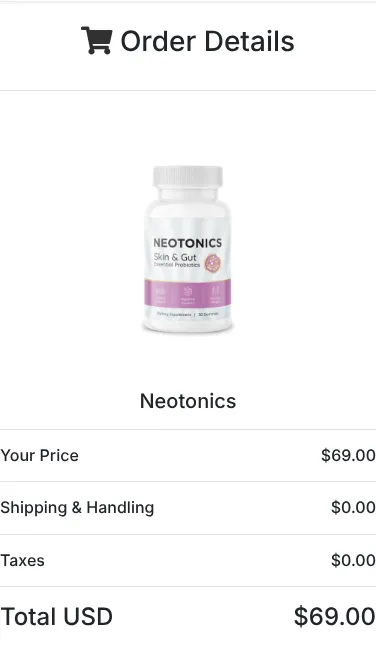
- At the secure checkout the bundles came to: Neotonics: $69.00 with free shipping; Neotonics - 3 Bottles: $177.00 with free shipping; Neotonics - 6 Bottles: $294.00 with free shipping. Tax showed as $0.00.
- Contact address listed on the official site: contact@neotonics-product.com.
Neotonics vs. Other Gut-Skin Gummies
If you have been comparing products, you may notice that PrimeBiome, another gut-skin probiotic gummy, publishes a label with the same probiotic count, the same 430 mg blend of nine ingredients and the same Largo, Florida distribution address. The two appear to be closely related formulas sold under different names, so there is little reason to buy both or to expect very different results. More generally, a conventional probiotic from a brand that names its strain and publishes per-ingredient doses gives you more information, while Neotonics' advantages are its gummy format and the herbal blend.
Where to Buy Neotonics
Neotonics is sold through its official website. Listings on marketplaces or unfamiliar stores may not honor the 60-day guarantee and could be old stock or imitations. Buying from the official order page is the safest way to get the genuine product and the published refund terms.
Final Verdict
Neotonics is a convenient probiotic gummy with a transparent ingredient list and a reasonable idea behind it: support the gut with a hardy probiotic and a prebiotic fiber, add traditional digestive herbs, and hope for indirect benefits in the skin. The digestive side has some supporting evidence for its main probiotic species. The skin side does not, at least not for an oral gummy at these doses.
Its weak points are the unnamed probiotic strain, the hidden herb doses, marketing that promises more than the research shows, and the babchi cautions. If you are a healthy adult without liver problems, not pregnant, not on interacting medication, and you want to try a gut-focused supplement, Neotonics is a reasonable option to test under its 60-day guarantee. Pair it with sunscreen and good sleep, judge it mostly on digestion, and treat any improvement in your skin as a bonus rather than the promise.
Frequently Asked Questions (FAQs)
Is Neotonics FDA-approved?
No. The FDA does not approve dietary supplements. The official site shows an FDA-registered facility badge, which relates to manufacturing, not proof that the product works.
How many CFU does Neotonics contain?
The label lists 500 million CFU of Bacillus coagulans per gummy. The strain is not named, and several human studies on this species used 1 to 2 billion CFU or more.
Can Neotonics reduce wrinkles?
There is no clinical evidence that Neotonics reduces wrinkles. Bakuchiol from babchi has been studied as a face cream, not as an oral supplement, and probiotic research on skin aging is still early.
Does Neotonics have side effects?
Mild gas or bloating is possible in the first weeks. Babchi can increase sun sensitivity and has been linked to rare liver problems, and fenugreek may lower blood sugar. Check with a doctor if you take medication or are pregnant.
How long does Neotonics take to work?
The brand advises using it for at least three months. Digestive changes, if any, usually appear within a few weeks; skin changes would take longer to judge.
Is Neotonics a subscription?
No. The official site states it is a one-time payment with no recurring charges or automatic shipments.
How do I get a refund?
Email support with "Refund Request" in the subject within 60 days of delivery and return all bottles with the packing slip. Return postage is your cost.
Want to compare the current Neotonics packages? The official site shows today's prices.
Visit the Official Neotonics Website →References
- NIH Office of Dietary Supplements. Probiotics — Fact Sheet for Health Professionals.
- National Center for Complementary and Integrative Health (NCCIH). Probiotics: What You Need To Know.
- Salem I, Ramser A, Isham N, Ghannoum MA. The gut microbiome as a major regulator of the gut-skin axis. Front Microbiol. 2018;9:1459.
- Majeed M, et al. Bacillus coagulans MTCC 5856 supplementation in the management of diarrhea predominant irritable bowel syndrome: a double blind randomized placebo controlled pilot clinical study. Nutr J. 2016;15:21.
- Hun L. Bacillus coagulans significantly improved abdominal pain and bloating in patients with IBS. Postgrad Med. 2009;121(2):119-124.
- Thompson SV, Hannon BA, An R, Holscher HD. Effects of isolated soluble fiber supplementation on body weight, glycemia, and insulinemia in adults with overweight and obesity: a systematic review and meta-analysis of randomized controlled trials. Am J Clin Nutr. 2017;106(6):1514-1528.
- Dhaliwal S, et al. Prospective, randomized, double-blind assessment of topical bakuchiol and retinol for facial photoageing. Br J Dermatol. 2019;180(2):289-296.
- Mori K, et al. Improving effects of the mushroom Yamabushitake (Hericium erinaceus) on mild cognitive impairment: a double-blind placebo-controlled clinical trial. Phytother Res. 2009;23(3):367-372.
- Clare BA, Conroy RS, Spelman K. The diuretic effect in human subjects of an extract of Taraxacum officinale folium over a single day. J Altern Complement Med. 2009;15(8):929-934.
- NCCIH. Fenugreek; Ginger; Dandelion — herb fact sheets.
This review is for general information only and is not medical advice. Product details (ingredients, prices, guarantee) come from the official Neotonics pages as checked in October 2026; they can change, so confirm them at checkout. Talk to your doctor before starting any supplement, especially if you take prescription medication or have a health condition.